
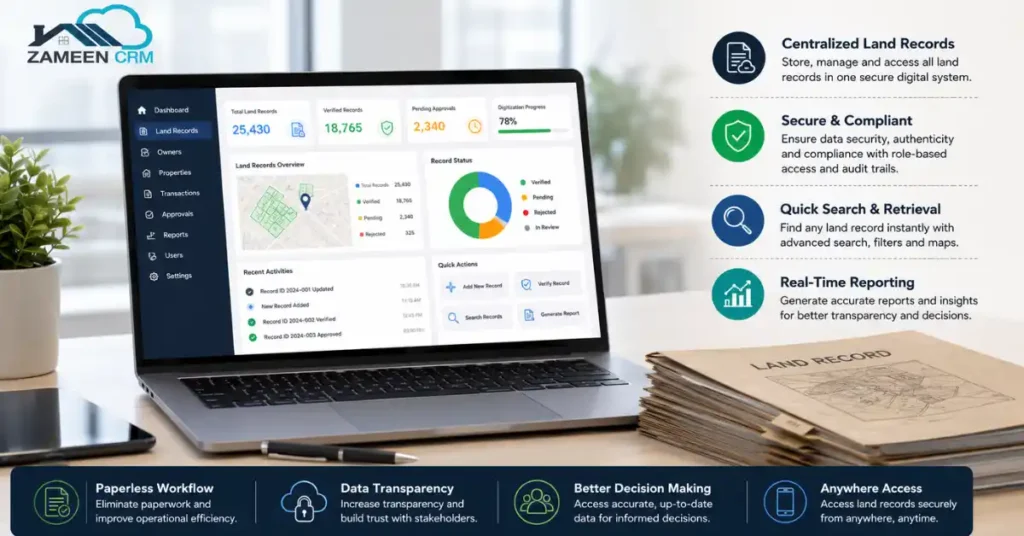
Have you found yourself spending weeks trying to locate an old document relating to a piece of property, only to find out that the text was blurred or, worse yet, the documents had disappeared altogether? Traditionally, doing business in Pakistan has been all about wading through endless manual records and visiting hectic offices for any issue regarding the property.
Fortunately, the industry has been seeing quite a change of pace. Implementing Digital Land Records Management allows real estate agencies and property developers to protect their data, clarify true ownership instantly, and stop costly transaction mistakes. Moving your files to a unified system is the fastest way to build public trust, streamline your office’s daily tasks, and run a highly secure property business.
What Is Digital Land Records Management?
This system involves shifting from physical paper ledgers to a modern, searchable, and web-connected setup.
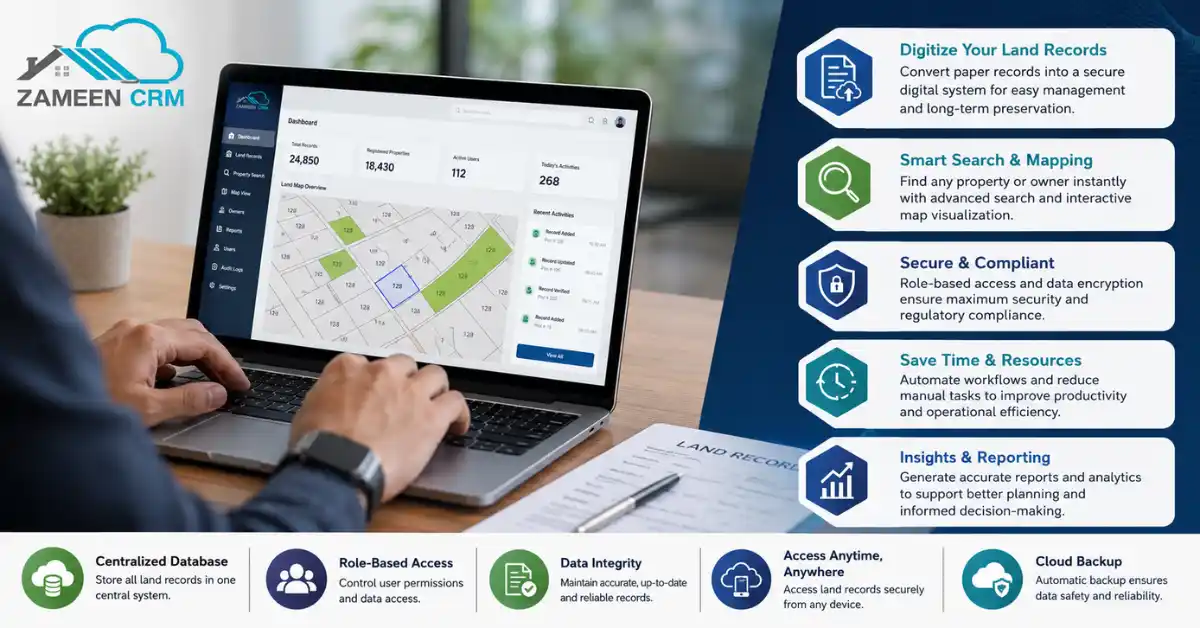
Understanding Digital Land Records
Instead of writing names in bulky handwritten logs, a modern system stores every plot size, boundary, and history electronically. This practice speeds up the creation of a clean digital property registry so anyone can access structural data instantly.
How Digital Land Records Differ from Manual Records
Manual tracking relies on physical files that rot, tear, or vanish over time. A modern land record system utilizes secure digital hosting, meaning updates happen in real time and data cannot be secretly altered or wiped out by a single accidental spill.
Why Digital Record Management Matters Today
With local organizations like the Punjab Land Records Authority and the Board of Revenue Punjab leading official digitization drives, your business needs to stay fully aligned. Modern buyers expect instant property proof before they hand over hard-earned money.
Common Challenges with Traditional Land Record Systems
Relying on traditional paper workflows exposes real estate businesses to constant, avoidable operational risks:
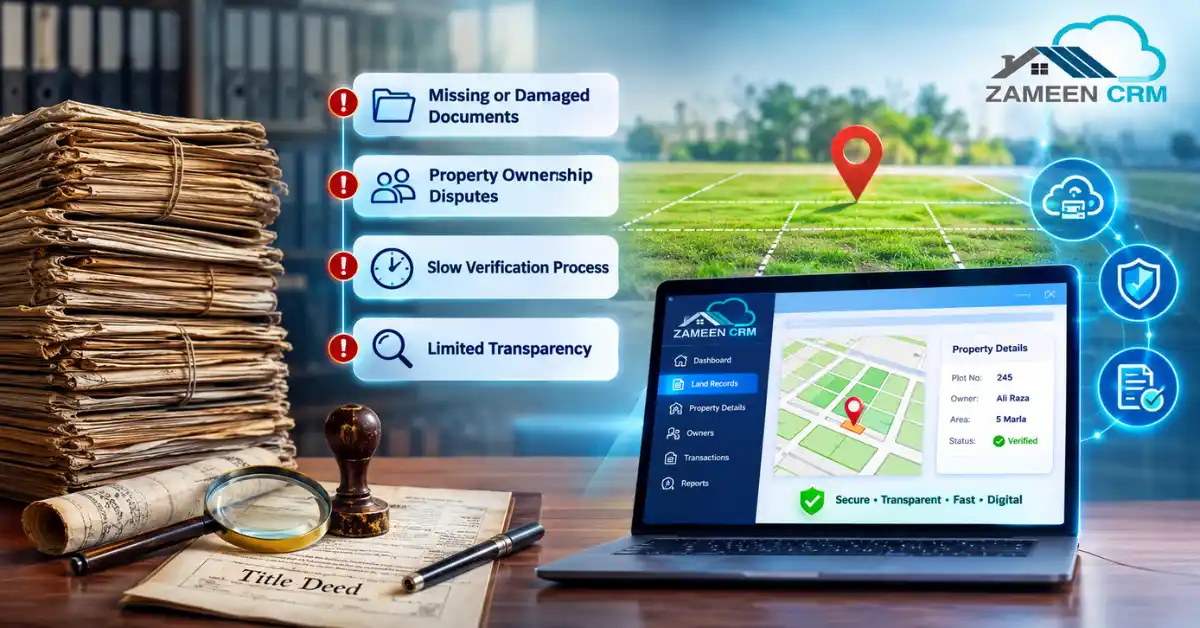
- Missing or Damaged Documents: Ink fades, paper gets misplaced, and storage rooms face physical damage, destroying decades of critical legal history.
- Property Ownership Disputes: When multiple manual files claim different owners for the same plot, resolving the issue takes years in court.
- Slow Verification Process: Sending a team member to an agency office to manually verify a title deed wastes days of valuable deal-making time.
- Limited Transparency: Closed, paper-bound systems make it easy for bad actors to conceal title issues or hide outstanding corporate liabilities.
What a Digital Land Records Management Works
The structural lifecycle of a modern property tracking platform moves through distinct, organized phases to preserve total data safety.
DIGITAL RECORD SYSTEM FLOW
- Data Collection -> Scanning paper files & entering dimensions
- GIS Mapping -> Linking titles with live satellite maps
- Cloud Storage -> Hosting files on a secure remote server
- Instant Retrieval-> Searching ownership logs in seconds
First, old paper documents are scanned during the initial land record digitization phase. Next, engineers connect these entries with a Geographic Information System (GIS) to map exact coordinates on a satellite display, creating a clean digital cadastral mapping layout. Finally, everything goes into a safe, secure cloud-based property records repository, ready for instant access by authorized managers.
Streamline Your Property Portfolio with Zameen CRM
Managing multi-channel leads, plot maps, and legal property records by hand is a recipe for disaster. Zameen CRM unifies your entire inventory, providing real-time property tracking, automated document updates, and total data protection.
Empower your sales agents and secure your investments today. Reach out to our team at info@zameencrm.com to discover our comprehensive real estate CRM tools.
Key Features of a Modern Record System
A high-quality property management software solution must deliver specific technical features to keep your business fully optimized.
Centralized Property Database
All of your listings, histories, and sales contracts should live inside a single centralized property database. This setup ensures that your sales agents, accountants, and executives are always looking at identical, accurate information.
Ownership Verification and User Access Control
Your platform should connect seamlessly with a document verification system to cross-reference national identification records via the National Database and Registration Authority. To protect these records, digital record security protocols must include role-based permissions, ensuring only specific managers can approve an ownership transfer process.
Top Benefits of Digital Land Records Management
Upgrading your office workflow to a secure, modern platform delivers massive returns for your daily operations.
Feature
Traditional Records
Digital Land Records
Record Search
Slow, manual, office-bound
Instant via a search bar
Data Accuracy
High risk of duplicate entries
Precision property data management
Fraud Prevention
Limited, easily forged signatures
Tamper-proof digital title management
Accessibility
Requires physical presence
Available anywhere via cloud portals
System Backup
Impossible to replicate the paper
Automatic electronic document management
If your agency handles residential projects or commercial high-rises, digital efficiency directly affects your bottom line.
Faster Property Sales
Deals move at the speed of trust. Providing verified online land records details on day one cuts out weeks of hesitation, accelerating your standard property transaction management timeline.
Better Customer Experience
Clients appreciate clarity. Displaying verified boundaries through interactive maps gives buyers peace of mind, enhancing your overall property lifecycle management score.
Easier Document Management
No more hunting through metal filing cabinets. A clean document management system allows you to attach scans, tax receipts, and identity documents directly to a specific plot listing.
How Zameen CRM Supports Digital Land Records Management
As an advanced real estate CRM, Zameen CRM is engineered specifically to bring modern real estate automation to local market operators.
Total Portfolio Organization
The platform acts as an all-in-one property intelligence center, organizing your raw inventory, tracking payments, and storing legal property records inside a highly secure ecosystem.
Workflow Automation and Security
With integrated real estate workflow automation, the platform reminds your team about upcoming installments, monitors compliance milestones, and tracks every file change with a clear history log, keeping your business fully prepared for smart land administration demands.
Essential Technologies Behind Modern Property Platforms
Several core technologies work together behind the scenes to maintain your everyday business data:
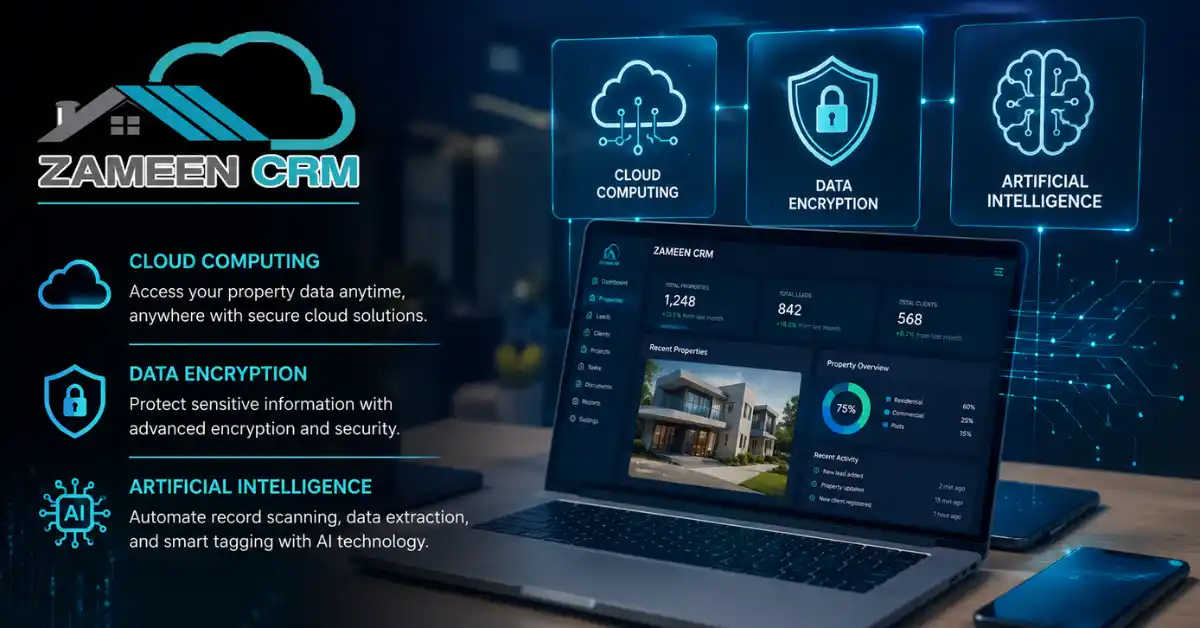
- Cloud Computing: Offers fluid system scalability, allowing you to access files from a smartphone while on a construction site or traveling abroad.
- Data Encryption: Protects sensitive financial details from external security breaches, ensuring high-grade cybersecurity across your organization.
- Artificial Intelligence: Speeds up your property record automation by automatically scanning uploaded PDFs, reading text fields, and organizing tags without human intervention.
Common Mistakes to Avoid
- Incomplete Data Migration: Rushing the digitization phase and leaving out old history logs causes massive confusion down the road.
- Poor System Security: Using weak passwords or failing to enable encryption puts your private corporate data at risk.
- Ignoring Team Training: If your agents do not know how to navigate your digital documentation workflow, they will quickly slide back into messy manual habits.
Future Trends in Land Records
The future of property ownership is becoming increasingly automated and connected. We will soon see widespread adoption of blockchain registries, making property titles completely immutable and impossible to forge. Additionally, AI-powered property verification will cross-reference tax backgrounds, court histories, and registry status in just a few clicks, making real estate purchases as simple as online shopping.
Final Thoughts
Sticking with old-fashioned paper logs and scattered spreadsheets is a major risk in today’s fast-moving property market. Moving your office workflows to a secure system built around Digital Land Records Management protects your company from legal errors, eliminates administrative delays, and boosts buyer confidence.
Ready to future-proof your real estate business? Let Zameen CRM help you organize your inventory, protect your documentation, and close transactions faster. Contact our dedicated support team today at info@zameencrm.com to learn how easy your digital transition can be!
Frequently Asked Questions
What is digital land records management?
It is the process of shifting traditional, paper-based real estate data into a secure, searchable, and centralized electronic database system.
How does land digitization reduce property fraud?
By using secure user tracking, electronic signatures, and identity checks, it prevents bad actors from creating forged title deeds or selling the same plot twice.
Can digital land records improve property verification?
Yes, it cuts verification times from days to seconds by allowing agents to check a live property ownership database via any web-connected device.
Is cloud-based land record management secure?
Yes, premium platforms utilize advanced data encryption and routine automatic backups to keep sensitive company records safe from physical damage and cyber threats.
What is the difference between manual and digital records?
Manual records live on fragile paper books that are slow to search and easy to lose, while digital records are instant, scalable, and fully secure.
How does a CRM help manage land records?
A specialized CRM unifies customer profiles with specific plot records, tracks payment histories, and automates document workflows from a single dashboard.